

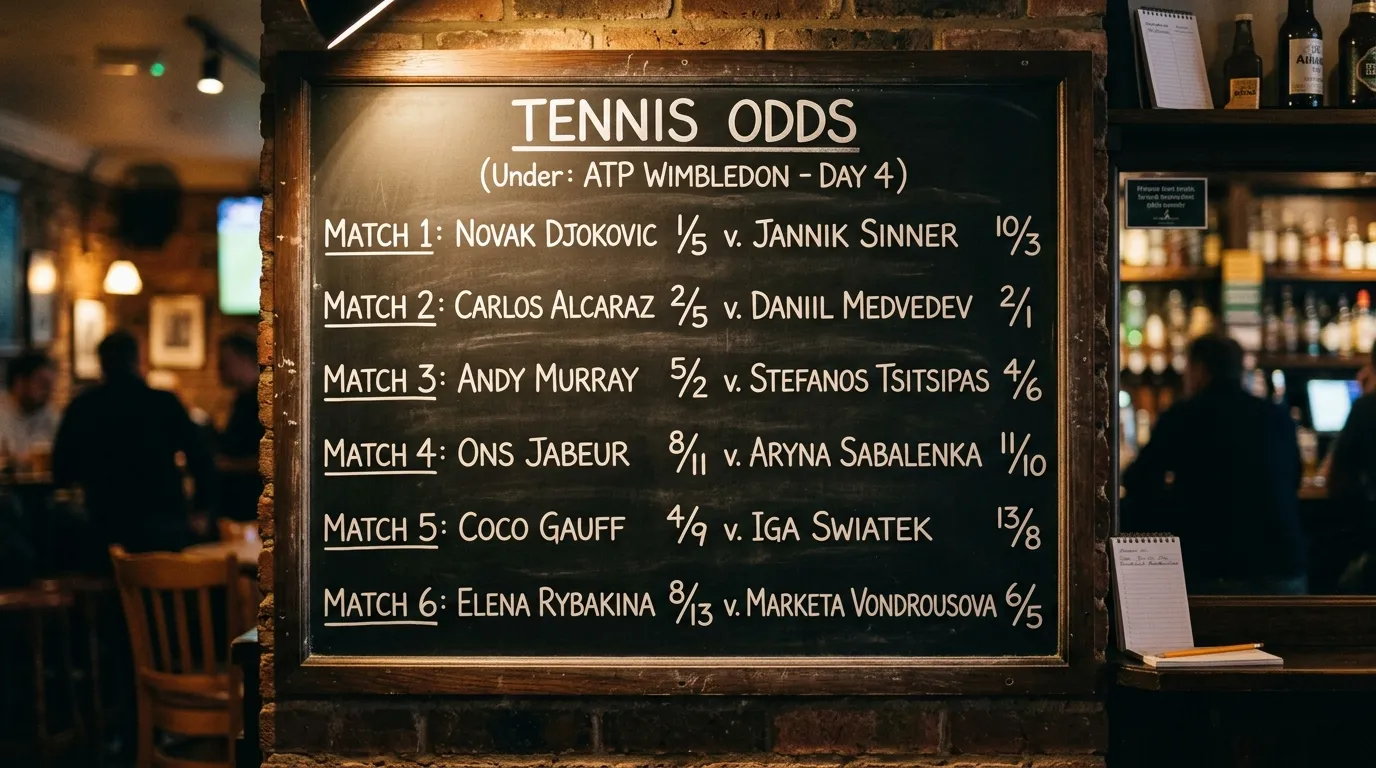
I have lost count of how many sharp, numerate friends have frozen at a fractional price. They can model a player’s serve hold rate in their head, then stare blankly at 11/4 as if it were ancient runes. Fractional odds are the traditional British way of pricing a bet, and they trip up newcomers precisely because they look like arithmetic but do not behave like the decimals everyone grew up with.
Fractional odds express your potential profit relative to your stake as a fraction, such as 5/2 or 4/6. The number on the left is what you win, the number on the right is what you stake to win it. That is the whole secret, and once it clicks, you can read any UK price at a glance and, more importantly, translate it into the probability the bookmaker is implying. This guide is about getting that fluency, because reading the price is the foundation of every other betting skill.
Reading a Fraction Without Reaching for a Calculator
Start with the simplest possible example and the rest follows. A price of 5/1 means you win five for every one you stake, so a one-pound bet returns five pounds profit plus your pound back, six in total. Read left-to-right as “win this, for staking that,” and the most common tennis prices stop being intimidating.
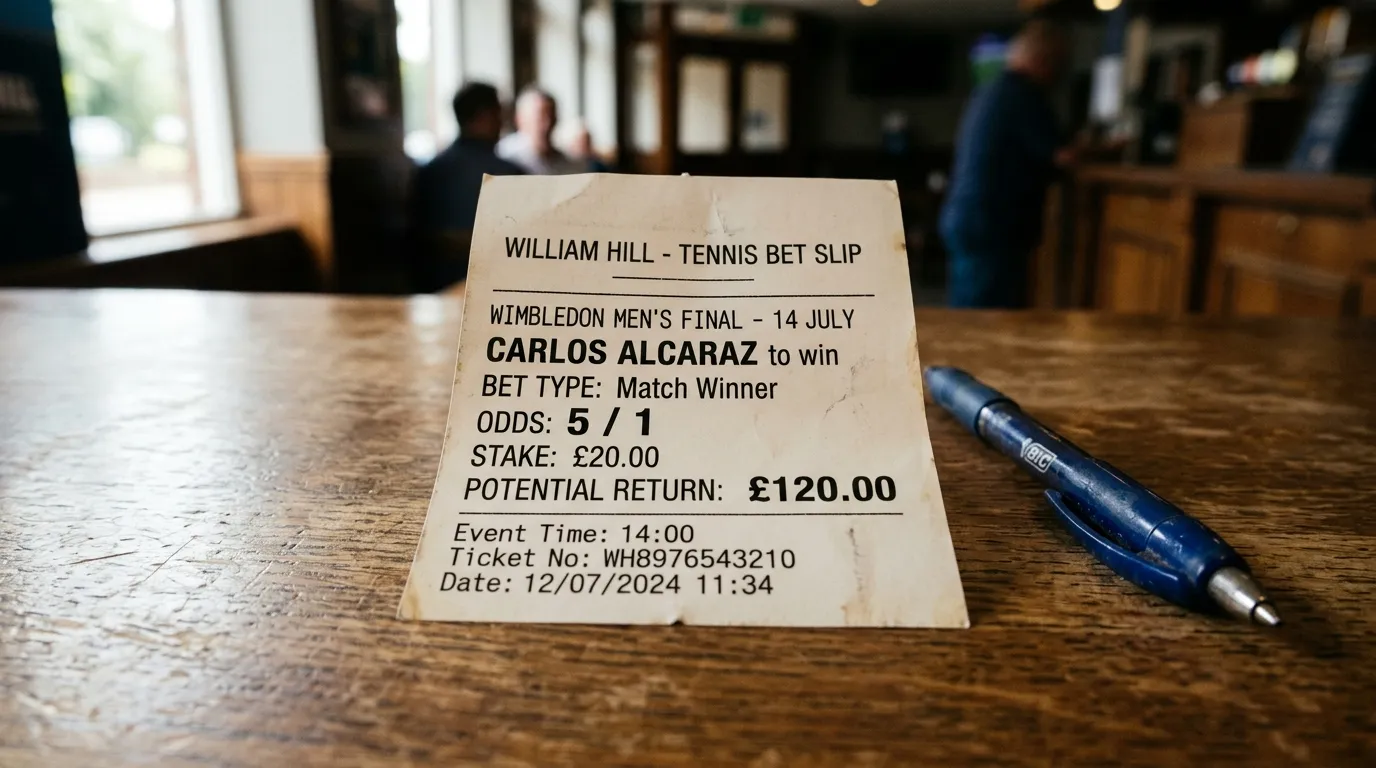
The fractions get less friendly when both numbers grow. A price of 5/2 means you win five for every two staked, so a two-pound bet returns five profit. Scale it to whatever stake you like: ten pounds at 5/2 wins twenty-five, because ten is five lots of two, and five lots of five is twenty-five. The trick is to see the fraction as a ratio you can scale up, not as a sum to solve. Odds-against prices, where the left number is bigger, mean the player is the underdog. Odds-on prices, where the right number is bigger, such as 4/6, mean a favourite where you stake more than you stand to win.
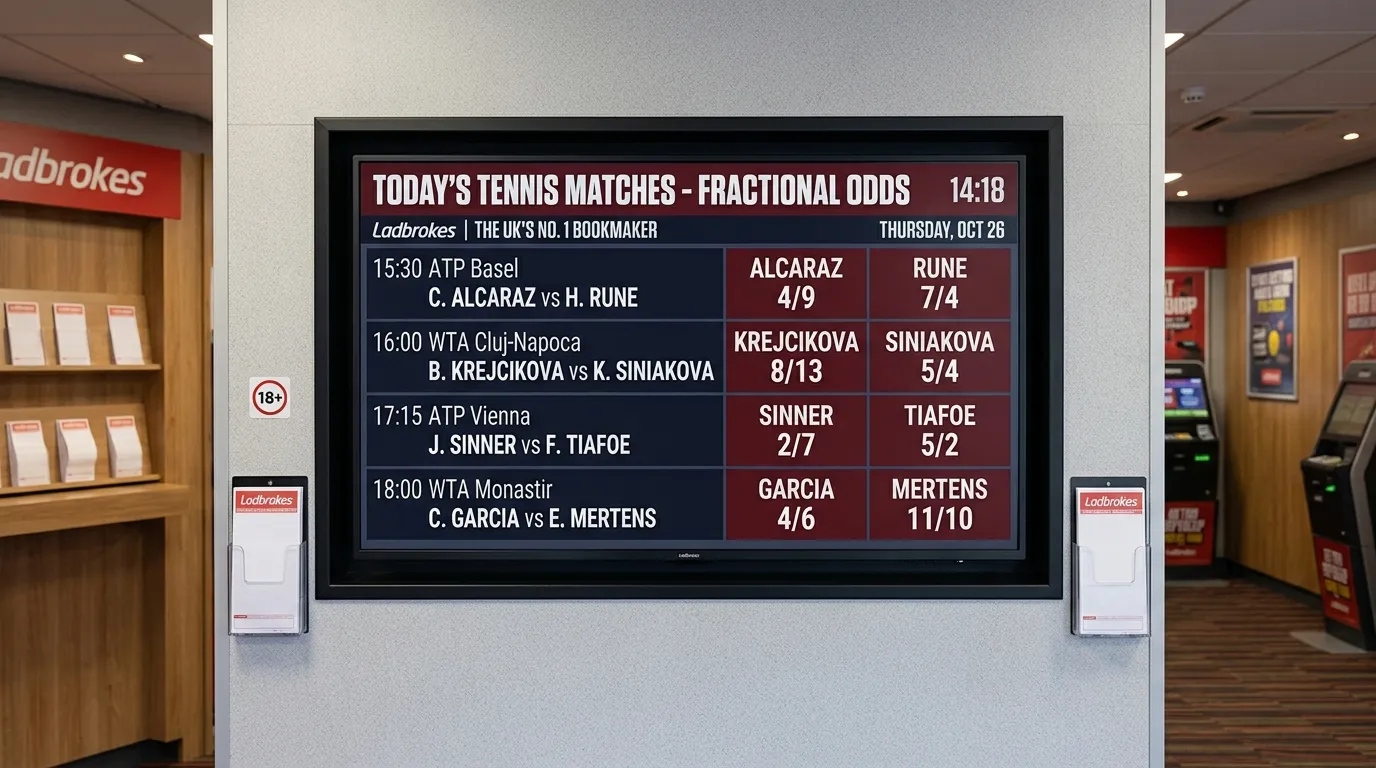
The scale of betting in Britain means these prices are everywhere, on every screen and slip. Over the course of a year, around 26.1 billion bets and spins were placed in the UK, with roughly 12 million active accounts in any given month, and the overwhelming majority of those sportsbook prices are shown the fractional way by default. If you bet in Britain, fluency in fractions is not optional, it is the native language of the market, and stumbling over it is a tax you pay on every wager.
Turning a Fraction Into a Probability
Here is the part that actually makes you money, and almost nobody bothers to learn it. Every price contains a hidden probability, the bookmaker’s estimate of how likely the outcome is, and you can extract it from any fraction with one small calculation. Reading the implied probability is how you judge whether a price is generous or mean.
The formula is simple. Take the right-hand number and divide it by the sum of both numbers. A price of 4/1 gives you one divided by five, which is 0.2, or a 20 percent implied probability. A price of 5/2 gives two divided by seven, roughly 0.286, so about 29 percent. An even-money price of 1/1 gives one divided by two, exactly 50 percent. Run that calculation and the abstract fraction becomes a concrete statement: the bookmaker thinks this player wins this often.

Why does this matter so much? Because betting is the business of finding prices where your own estimate of the probability beats the bookmaker’s. If you reckon a player wins 40 percent of the time and the price implies only 29 percent, that gap is your edge. Without converting the fraction to a probability, you are betting on instinct alone, unable to tell a fair price from a robbery. This single habit separates people who bet on numbers from people who bet on feelings.
Switching Between Fractional and Decimal
Plenty of bettors, especially those who use exchanges or follow continental markets, find decimal odds easier, and being able to flip between the two formats is a genuinely useful skill. Decimal odds express the total return per unit staked, including your stake, rather than just the profit.

The conversion is a one-step move. Take the fraction, divide the left number by the right, and add one. A price of 5/1 becomes five divided by one, which is five, plus one, giving 6.00 in decimal. A price of 5/2 becomes 2.5 plus one, which is 3.50. Even money, 1/1, becomes 2.00. The “add one” step is just folding your returned stake into the figure, which is why decimal odds always look a notch bigger than the fractional profit alone. Many UK sites let you toggle the display, and I keep mine on whichever format suits the bet, but I can read both because some markets only ever show one.
This fluency matters more than it used to, because the British betting public is enormous and increasingly format-flexible. With around 22.5 million adults in Britain placing a bet in a typical month, operators court bettors who came up on decimal apps as much as those raised on fractional boards, and the same tennis match can appear in both formats depending on where you look. Reading across formats stops you being confused by a price that is identical in value but unfamiliar in dress.
Working Through Real Payout Sums
Let me run a couple of full examples the way I do them at the screen, because seeing the money land makes the theory stick. Say I back a player at 7/4 for a stake of twenty pounds. Seven divided by four is 1.75, so my profit is twenty multiplied by 1.75, which is thirty-five pounds, and I get my twenty back, for a total return of fifty-five. The implied probability, four divided by eleven, is about 36 percent, so I should only take that bet if I think the player wins more often than that.

Now an odds-on favourite at 2/5 for the same twenty pounds. Two divided by five is 0.4, so my profit is twenty times 0.4, which is eight pounds, returning twenty-eight in total. The implied probability, five divided by seven, is about 71 percent. That is the reality of backing short favourites: you risk a lot to win a little, and the price is already demanding that the player wins roughly seven times in ten just to break even on the bookmaker’s terms. Seeing those numbers laid out is usually enough to make people think twice about stacking up odds-on favourites.
Once you can read a price, extract its probability and convert formats without breaking stride, you are ready for the next layer, which is noticing that the same match is priced differently across operators and that those small differences compound over a season. That is the territory of tennis odds comparison, where the habit of reading prices fluently turns into the habit of shopping for the best one. Fluency is the door. Comparison is the room behind it.
Articles
Created by the "bets-on-tennis.com" editorial team.
