


The first tennis bet I ever placed was on the match winner. So was the second, and probably the next two hundred after that. It took me an embarrassingly long time to notice that the same match I was staring at offered three dozen other ways to get involved, most of which were priced more loosely than the one everybody piles into. With around 22.5 million adults in Britain having a bet each month, as the Betting and Gaming Council’s chief Grainne Hurst likes to remind the room, the overwhelming majority of those punters back a player to win and never look any further down the coupon.
That is the central idea of this whole piece. Tennis betting markets are not a single menu where you pick a favourite and walk away. They are a sprawl of related questions about one match, and the skill that separates a thoughtful bettor from a hopeful one is rarely about who wins. It is about which question to answer. Picking the right market matters more than picking the right player, because the right market is where the bookmaker has been lazy with its price.
So this is a tour of the lot. I will walk through match winner, set betting, handicaps, totals, props and outrights, explain what each one is actually asking you, and show where the value tends to hide. Treat it as a map rather than a ranking. By the end you should be able to look at a single match and see ten bets instead of one.
Why the match winner is the most crowded room in the building
Imagine walking into a pub where 90% of the punters are standing in one corner shouting about the same thing. That corner is the match winner market. It is the bet everyone understands, the bet the apps push to the top of the screen, and consequently the bet where the bookmaker sharpens its margin hardest because it knows the volume is coming regardless.
The match winner market does exactly what the name says: you back a player to win the match outright, and the only thing that matters is the final result. Two-way market, no draw, clean settlement. On the ATP and WTA tours you will usually see it priced in fractions in the UK, so a strong favourite might sit at 1/3 and the outsider at 9/4. The appeal is obvious. It is intuitive, it settles quickly, and you do not need to understand the scoreline to collect.

The problem is also obvious once you have been doing this a while. Because tennis has no draw and the better player wins far more often than in most sports, match winner prices on big favourites are short and the margin baked into them is unforgiving. You end up risking four units to win one, and a single upset wipes out a long run of correct calls. The tennis betting segment was worth roughly 16.53 billion dollars in 2025, somewhere near a tenth of the entire sports betting market, and is still growing at close to 9% a year, which tells you how much money flows through these headline markets and how little incentive operators have to leave value lying around in them.
That does not mean you avoid match winner bets. It means you respect what they are. I treat the match winner as the market for genuine conviction, the one I use when I have a clear read on a mismatch and the price is fat enough to justify the risk. For everything more nuanced, I look elsewhere on the coupon. The crowd has already done the bookmaker’s work in this corner. The edges live in the quieter rooms.
Set betting, where the scoreline becomes the question
Here is a scenario I see constantly. A heavy favourite is trading at 1/5 to win the match. You are convinced they will win, but 1/5 pays peanuts and an early break against them gives you a heart attack for no reward. So what do you do with a strong opinion that the headline market refuses to pay for? You move to set betting.
Set betting asks you to predict the result in sets rather than just the winner. The two common shapes are the set winner, where you back a player to take a specific set, and the correct set score, where you call the exact sequence such as 2-0 or 2-1 in a best-of-three. Because you are being asked for more precision, the price stretches out, and that extra length is the whole point. Backing a dominant favourite to win 2-0 turns a stingy 1/5 into something far more interesting, on the understanding that you now lose if they drop a set on the way through.
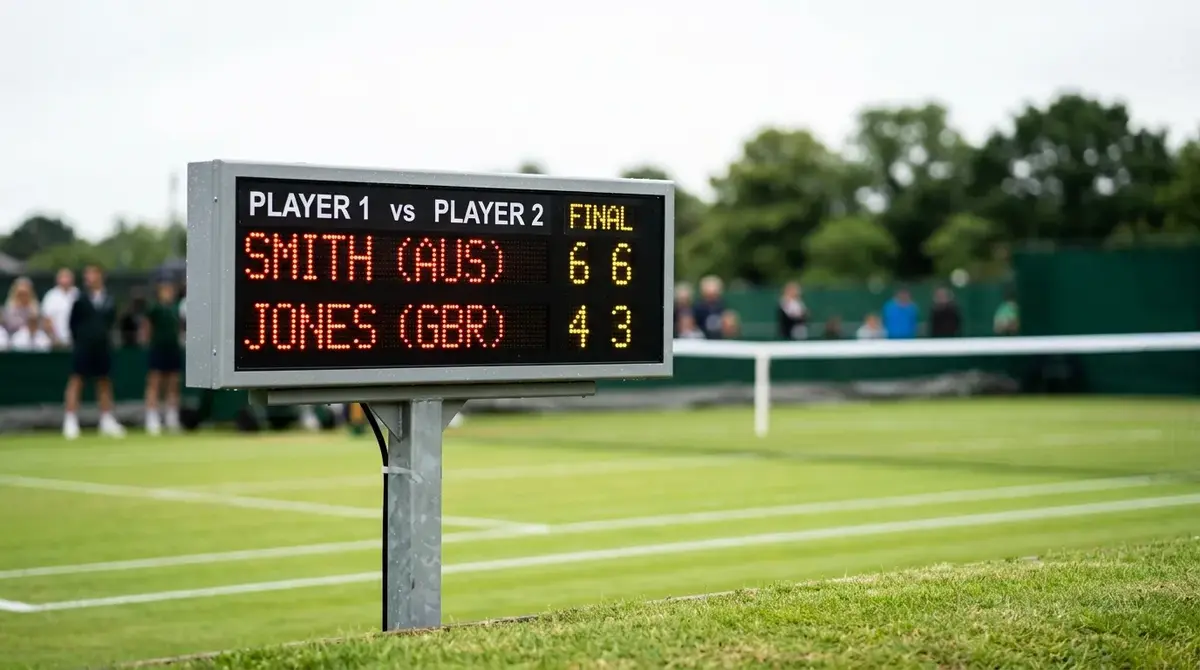
That trade-off is where set betting earns its keep and where it bites the careless. The format matters enormously. In best-of-three, a straight-sets win is common for a strong favourite, so 2-0 is often the sensible call. In the best-of-five men’s Slam matches, the maths shifts because there are more sets to navigate and more chances for a wobble, which lengthens the comeback scorelines and changes which scores represent value. I have lost count of the times a clear favourite has been broken once, taken a tighter first set than expected, and still cruised to a 2-0 or 3-0 result that paid me three times what the match winner would have.
The trap is treating set betting as a free upgrade on the match winner. It is not. You are taking on scoreline risk, and a single dropped set turns a winning opinion into a losing slip. If you want the full breakdown of when a set winner beats a correct score, and how to read a 2-1 on a slip without panicking, I have written a dedicated guide to tennis set betting that goes deeper than I can here. For our purposes, the lesson is simple: set betting is how you get paid for a strong opinion the headline market underprices, provided you are honest about the format.
Handicaps turn a one-sided match into a real contest
Tennis is the fastest-growing slice of online betting, on track for nearly 14% compound annual growth out to 2031, the highest rate of any sport. A big chunk of that growth is people discovering markets beyond the win-or-lose binary, and handicaps are the gateway. A handicap market hands one player a virtual head start or deficit before a ball is struck, which is how a 1/10 walkover on paper becomes a coin-flip worth betting.
There are two species, and confusing them costs money. A set handicap adjusts the result in sets. If you back a favourite at -1.5 sets in a best-of-three, you need them to win 2-0, because winning 2-1 only nets one set and fails to cover the line. Back the underdog at +1.5 sets and you are simply asking them to win a single set across the match, which they can do even while losing. A game handicap works on total games instead. A favourite at -4.5 games has to win by at least five games on aggregate across all sets, so a tight 6-4, 7-6 victory might not be enough even though they won comfortably in scoreline terms.
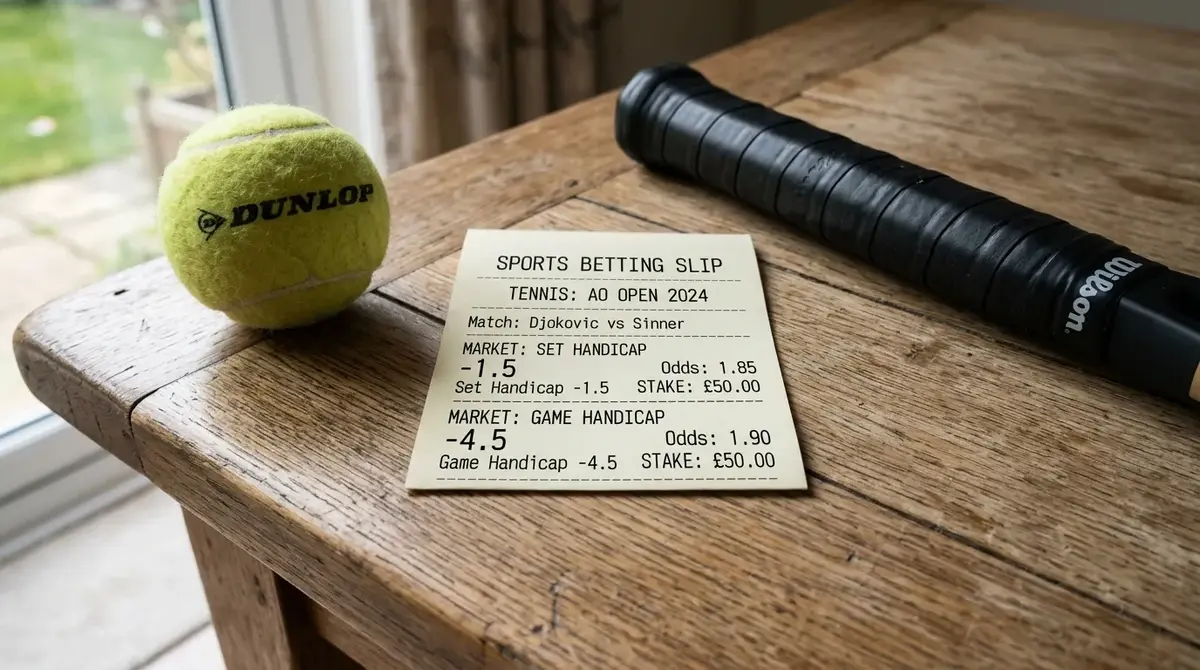
The reason handicaps are so useful is that they let you express a degree of confidence rather than a binary opinion. I rarely think a match is purely a toss-up. More often I think one player should win clearly but the match-winner price is too short to bother with, or I think the favourite will win but be made to work for it. Set and game handicaps let me bet that exact shade of opinion. The favourite I do not trust to win 2-0 might be a lovely bet at +2.5 games. The mismatch the market has already priced into a 1/8 favourite might still offer value at -1.5 sets if I think a bagel set is on the cards.
One habit worth building early: always check whether a handicap is quoted in sets or games before you stake. They look almost identical on a coupon, the numbers are deceptively similar, and a -1.5 means two completely different things depending on which one you are looking at. I keep the rule of thumb that set handicaps suit clear mismatches where the scoreline is the variable, and game handicaps suit competitive matches where I expect a steady edge rather than a blowout.
Totals ask how long the match runs, not who wins it
Some of my most reliable bets have nothing to do with which player I prefer. They are bets on the texture of the match. The over and under on total games is the cleanest example, and it is the market I reach for when I have a strong read on how a match will play but no strong view on the result.
A total games market sets a line, say 22.5 games, and asks whether the match will produce more or fewer than that across all sets. Two big servers who hold easily tend to push matches towards tiebreaks and longer set scores, nudging the total up, while a returner who breaks frequently can blow a match away in straight sets and send it under. You are reading serve-and-return dynamics, surface speed and head-to-head rhythm, not deciding who is better. That is a different and often easier question to answer well.
Totals come in flavours. The headline total covers the whole match. You will also find set-specific totals, alternative lines either side of the main number, and over-under markets on individual stats. The same logic threads through all of them: you are pricing the shape of the contest. This kind of bet has exploded in the live arena in particular, where point-by-point in-play betting now makes up more than 55% of all bets struck on tennis, because totals shift constantly as the match unfolds and bettors love trading that movement.

The common mistake is assuming two strong servers automatically mean over. Sometimes they do, but if both hold so comfortably that the match races through routine service games and finishes in straight sets with a couple of tiebreaks, the total can land surprisingly low. I treat the games line as a question about break frequency above all else. Frequent breaks lengthen matches and create more games; clean holds on both sides can actually shorten them. Get the break expectation right and the total looks after itself.
Props and specials, the fine print of a tennis match
During a fortnight at a Grand Slam I will sometimes place more prop bets than match bets, and I am not being clever for the sake of it. A Slam delivers a continuous stream of in-play markets across fourteen straight days, which keeps liquidity high and keeps bookmakers churning out props on everything from aces to tiebreaks. When there is that much betting happening, the specialist markets get less attention per pound than the headline ones, and inattention is where prices drift.
Prop and special markets cover the granular events inside a match. Total aces, total double faults, whether a tiebreak will be played, the number of breaks of serve, first set winner, race to a number of games, even which player serves the first ace. These markets are priced off serve-and-return data and surface characteristics far more than off who is likely to win, which is exactly why they reward homework. A booming server on a fast court is a different proposition for an aces line than the same player grinding on slow clay, regardless of how the match-winner price looks.

I find serve-based props the most honest markets in tennis because they are so directly tied to measurable, repeatable player traits. A player’s ace rate and double-fault tendency do not swing wildly from week to week the way confidence and form might. If you know a server averages a high count on quick surfaces and the aces line has been set conservatively, that is a cleaner read than guessing the outcome of a close match. The same goes for tiebreak markets, which are really just a question about how tightly both players hold serve.
The warning here is liquidity and limits. Bookmakers know their prop prices are softer, so they restrict stakes and move lines quickly when sharp money arrives. Treat props as a place for small, well-reasoned positions rather than the home of your biggest stakes. The edges are real but the ceilings are low, and trying to force serious money through a thin market is the fastest way to get your account flagged.
Outrights and futures, the long game
Every January I tie up a small slice of my bankroll in Australian Open outrights and then watch it sit there, frozen, for the better part of three weeks. It is the least exciting money I bet all year and occasionally the most profitable, and it operates on completely different rules to everything above.
An outright, or future, is a bet on the result of an entire tournament rather than a single match. Back a player to win the title, reach the final, or make the semis, and your stake is locked away until the event resolves. The prices are long because the field is large and a lot has to go right, which is the appeal and the catch in equal measure. You can land a generous number, but your capital is tied up for the duration and a single shock result in an early round ends your run with two weeks still to play.
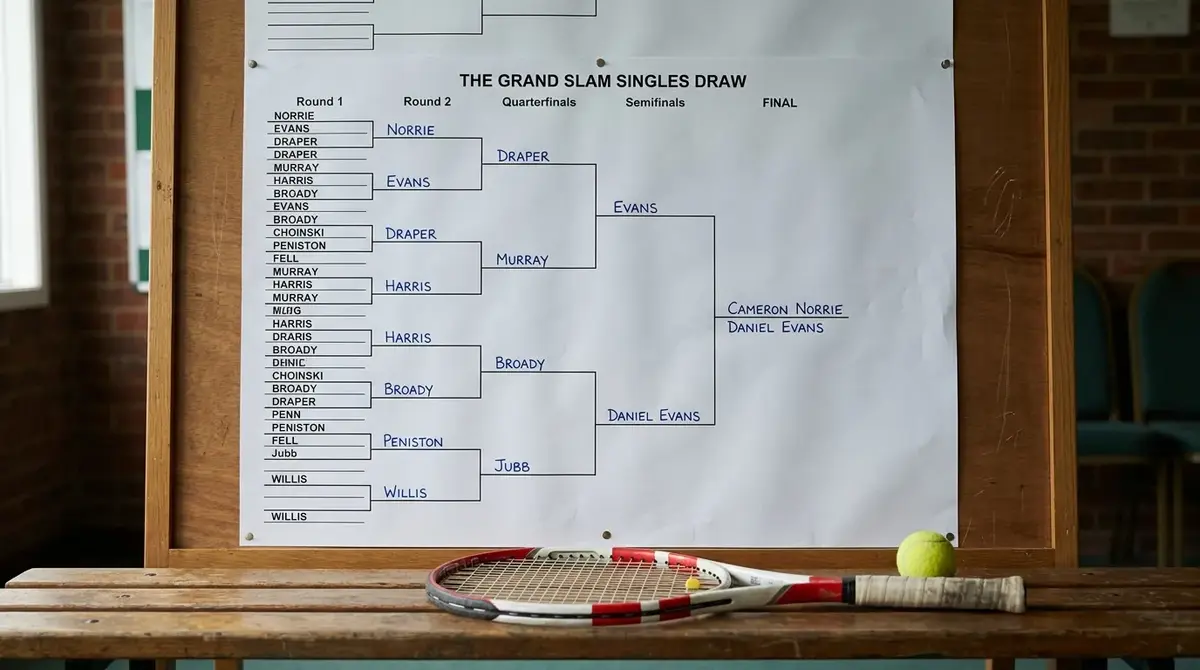
The skill in outrights is reading the draw as much as reading the players. A favourite with a brutal path to the final is worth less than the headline price suggests, while a dangerous floater handed a soft quarter can be a value play even at longer odds. Timing matters too. Ante-post prices before the draw is made offer the biggest numbers and the biggest uncertainty, since you are betting blind on who lands where. Once the draw drops, prices adjust fast and the value evaporates from the obvious names.
I keep outright exposure small precisely because of the frozen-capital problem. It is money I have written off for the tournament, sized so that a first-round exit does not dent my month. Used that way, outrights are a fun, low-maintenance corner of the portfolio. Used as a way to chase a life-changing number with a meaningful stake, they are a quick route to frustration.
How to choose the market that actually fits your opinion
If you take one thing from all of this, make it this: decide what you actually believe about a match before you look at the coupon, then find the market that pays for that belief. Most bettors do it backwards. They see a price they like, then talk themselves into the opinion that justifies it. That is how you end up with a slip full of markets that contradict each other.
Start from the question your read answers. If you are confident in the winner and the price is fat, the match winner is fine. If you are confident in the winner but the price is short, set betting or a set handicap pays for the same opinion at better odds. If you have no view on the winner but a strong sense of how the match will flow, totals and game handicaps are where you belong. If your edge is a specific player trait like a heavy serve, props are built for you. And if you are thinking weeks ahead about a whole event, outrights are the only market that fits.
The other discipline is matching the market to your knowledge of the tour. Markets do not behave identically across the ATP and WTA, because the formats and the depth of fields differ, so a habit that works on one tour can mislead you on the other. Build your reads tour by tour rather than assuming a single approach travels everywhere.
I keep a short mental checklist before every bet. What do I actually believe here? Which market asks exactly that question? Is the price for that market better than the match winner for the same opinion? If the answer to the last one is no, I take the simple bet. If it is yes, I take the smarter one. That single filter has done more for my results than any single piece of analysis, because it stops me overpaying for opinions in the most crowded corner of the building.
Tennis gives you more ways to be right than almost any other sport. The bettors who thrive are not the ones who pick the most winners. They are the ones who consistently bet their opinion in the market that pays the most for it. Learn the markets, learn what each one is really asking, and the same matches you have always watched start to look very different.
Articles
Prepared by the bets-on-tennis.com editorial staff.
