


There is a particular kind of frustration unique to a walkover, when the player you backed advances without hitting a ball and your winning bet is wiped out anyway. It feels deeply unfair the first time it happens, and it catches out almost everyone who has not read the rules. Your player is through to the next round, you were right, and yet there is no payout, because a match that never started cannot be won.
A walkover occurs when a player withdraws before a match begins, usually due to injury, illness or another reason, so their opponent advances without playing. It is different from a retirement, where a player quits during a match that has already started, and that distinction matters enormously for how your bet is settled. Where a retirement is governed by a tangle of market-specific rules, a walkover follows a cleaner but equally important logic that every tennis bettor needs to understand.
Why a Walkover Voids Your Bet
The governing principle is straightforward once you see it: betting markets require a match to actually take place. When a walkover happens, no match was played, so there is nothing for your bet to be settled against, and the near-universal rule is that the bet is voided and your stake returned in full. You do not win, even though your player advanced, and you do not lose, you simply get your money back.

This trips people up because it feels like they should collect. Their player is in the next round, the bet was on their player, so surely it won? But a bet on a tennis match is a bet on the outcome of a contest, and if the contest never occurs, the wager has no result to attach to. The advancement is an administrative decision by the tournament, not a sporting result, and bookmakers settle on the sport, not the bracket. Understanding this spares you the false hope of expecting a payout that is never coming.

The stake being returned is the saving grace, and it is worth appreciating. A void is not a loss, you are made whole, which is a far better outcome than the way some retirement scenarios play out. But it does mean that a result you anticipated, and any profit you were counting on, simply evaporates, which has real consequences when that bet was part of a larger plan.
Where Walkovers Cause Real Damage
The single-match walkover is clean enough: stake back, no harm done beyond a missed opportunity. The serious damage comes when that voided leg sits inside an accumulator, and this is where bettors who never thought about walkover rules suddenly pay attention. A walkover does not lose your acca, but it changes it completely.
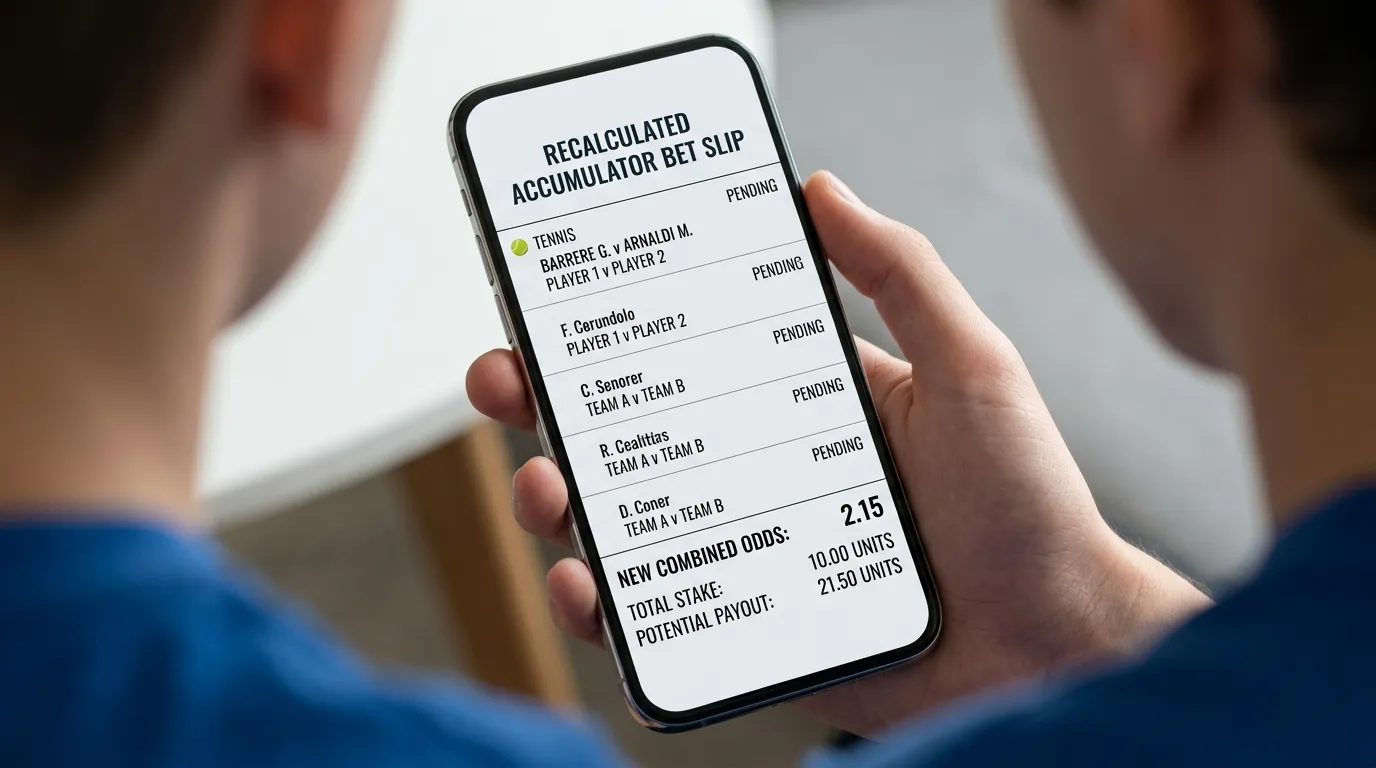
When one selection in a multiple is voided by a walkover, that leg is removed and the accumulator is recalculated on the remaining selections at reduced overall odds. Your four-fold becomes a treble, your potential return shrinks accordingly, and the bet you carefully constructed is quietly rebuilt into a smaller one. If you were relying on that voided leg as a banker, the hit to your potential payout can be substantial, even though no selection actually lost. The volume of tennis being bet makes this a frequent occurrence rather than a rarity, with the tennis betting segment worth roughly 16.53 billion dollars, around a tenth of the whole sports betting market, and withdrawals before play threading through that volume constantly.

This is why a walkover, despite returning your stake, can still wreck a betting plan. The accumulator you expected to deliver a large return now pays out a fraction of it, or the staking strategy you built around a particular outcome no longer holds. I always factor the possibility into how I construct multiples, especially when a leg involves a player carrying any fitness doubt, because a withdrawal before play can reshape the whole bet without a single one of my picks being wrong.
Betting Smart Around Withdrawals
The practical defence is awareness before the fact. I know going in that a walkover voids the affected bet and returns the stake, and I never expect a payout simply because my player advanced without playing. That single piece of knowledge prevents the false expectation that catches out so many bettors when a withdrawal is announced.
Beyond that, I pay attention to fitness news and injury doubts when I build any bet, particularly a multiple. A player nursing a problem in the days before a match carries a genuine walkover risk, and while that risk only voids rather than loses the bet, it can still unravel a carefully planned accumulator. Weighing that into selection, and being cautious about leaning on a doubtful player as the anchor of a multiple, is simply prudent. The depth of the calendar means there is always another match, with each Grand Slam alone delivering continuous in-play markets across fourteen days, so there is never any need to force a bet around a player whose participation is in question.

Walkovers and retirements are the two faces of the same problem, a match that does not reach its natural conclusion, and you need to understand both to navigate tennis settlement safely. Where a walkover voids cleanly before play, a retirement during a match brings its own more tangled set of rules across different markets. I cover that in-match scenario in detail in my guide to tennis retirement betting rules. Know how both are settled before you stake, and you close off one of the most common and frustrating ways to have a bet undone by something entirely outside your control.
Articles
Created by the "bets-on-tennis.com" editorial team.
