


Loyalty to a single bookmaker has probably cost me more over the years than any losing run ever did, and it took me an embarrassingly long time to notice. Andrew Rhodes, the chief executive of the Gambling Commission, has observed that “the relative value of gambling has fallen in recent years,” and while he was talking about the industry at large, the line lands hard for anyone who bets the same match at the same operator out of habit. You are accepting a worse price for no reason other than convenience.
Odds comparison, or line shopping, is the practice of checking the price for the same selection across multiple operators and taking the best one. The same tennis match is priced differently by different firms, sometimes by a meaningful margin, and consistently taking the higher price is one of the few genuinely free edges available to a recreational bettor. It is not glamorous and it requires no special insight, which is precisely why so many people skip it.
What the Bookmaker’s Margin Quietly Takes
Every price you see has the bookmaker’s profit baked into it, and that profit has a name worth knowing: the overround, or margin. Understanding it changes how you look at every market, because it reveals that the odds are never a fair reflection of probability. They are deliberately shaded against you.
Here is how it works. In a fair two-player tennis match where both have an equal chance, the true price would be even money on each, and the implied probabilities would sum to exactly 100 percent. But a bookmaker does not offer even money on both. They might offer a fraction shorter on each side, so the implied probabilities add up to perhaps 105 or 108 percent. That excess over 100 is the overround, the house edge, and it is the cost of doing business with that firm. The bigger the overround, the more the price is shaded against you on both sides.

The money involved is colossal, which is why even small margin differences matter. UK online gambling generated 7.8 billion pounds in gross gambling yield, up 13.1 percent year on year, and a large slice of that is simply the overround quietly accumulating across millions of bets. The firms make their living on that margin. The point of comparison is to pay the smallest margin available for any given bet, because the difference between a tight market and a fat one goes directly into or out of your pocket over time.

The Mechanics of Shopping a Line
Line shopping sounds tedious, and done badly it is. Done well it is a thirty-second habit that compounds into real money. The goal is simple: before you place a bet, you want to know that no one is offering a better price on the exact same selection.
The discipline is to never bet the first price you see. When I fancy a player at a given price, I check the same selection across the operators I hold accounts with and take the best available number. On a single match the difference might look trivial, a few pence on a tenner, but across a year of betting those few pence repeat hundreds of times and the cumulative gap is anything but trivial. Sports betting is where the volume lives, with online sports betting generating 2.6 billion pounds in gross gambling yield, football alone accounting for 1.3 billion and horse racing 766.7 million, and tennis sitting within that ecosystem of constantly refreshing prices. With that many markets churning, the spread between the best and worst price on a given selection is wider than people assume, and consistently catching the best end of it is a structural advantage.

The reason this beats chasing bonuses is that a bonus is a one-off, often loaded with wagering conditions, while a better baseline price applies to every single bet you ever make. A firm that offers a flashy sign-up promotion but consistently posts shaded prices will cost you far more in the long run than a plain operator with tight margins. Loyalty to the bonus is loyalty to the worse deal.
Timing, Movement and the Shifting Price
Prices are not fixed, and the way they move is information in itself. A tennis line drifts and shortens in the days and hours before a match as money comes in, news emerges, and the firms adjust to balance their books. Knowing when to strike is a quieter skill that sits alongside knowing where.
Sometimes the best price is available early, before the market has settled, when one firm posts a generous opening line that later corrects. Sometimes it is available late, when a price drifts because the public has piled onto the favourite and the underdog has been pushed out beyond its true value. There is no universal rule, but the habit of watching how a line moves teaches you whether the market is sharpening toward your view or away from it. If a price you fancy keeps shortening, the market may know something you do not. If it keeps drifting in your favour, you may be early to a value that the crowd has not yet found.
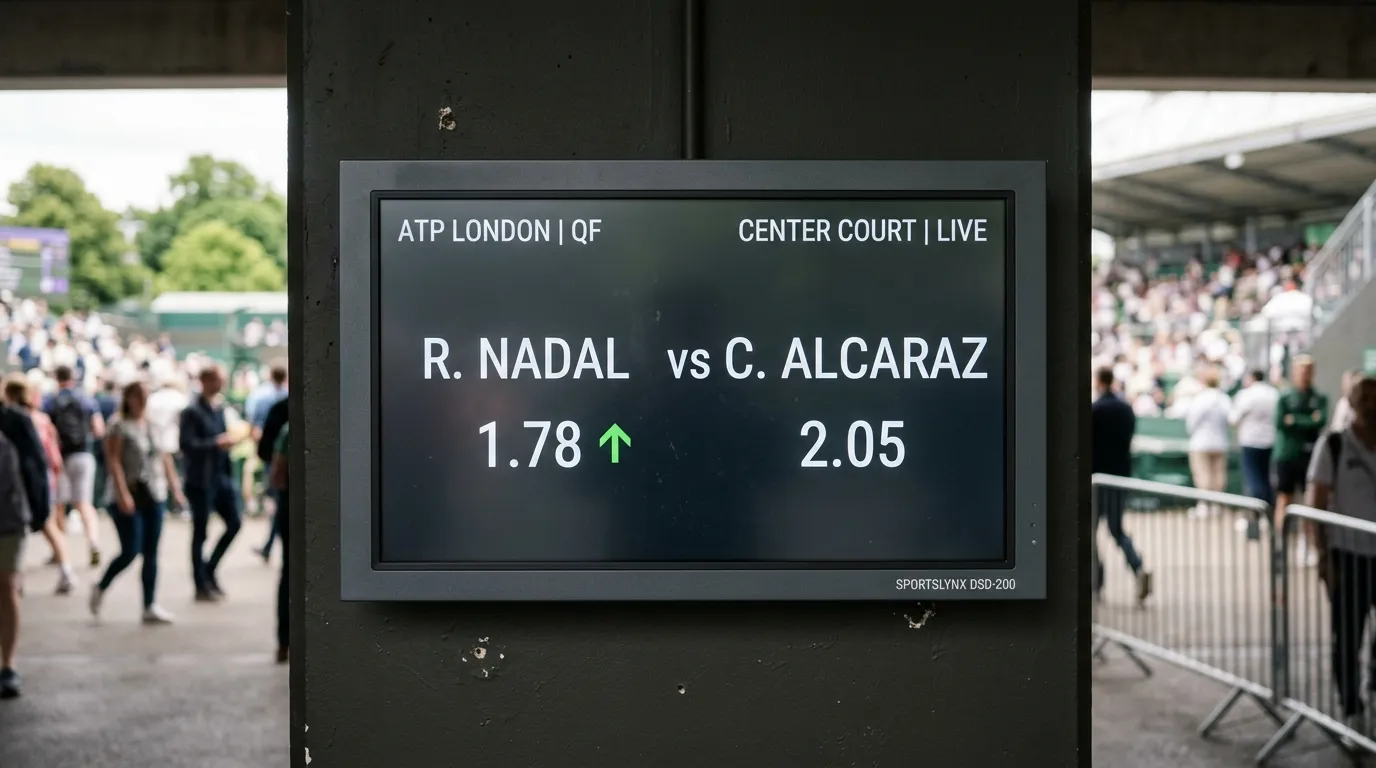
I treat price movement as a second opinion, not a command. It tells me where the weight of money is going, which is useful context, but my own probability estimate remains the anchor. The bettor who chases every move ends up paying the worst of all prices, while the bettor who ignores movement entirely misses the signals that the line is telling them something.
Building the Habits That Protect Your Returns
The practical setup that makes comparison painless is holding accounts with several reputable, licensed operators so that you can actually access different prices when you want them. One account means one price, take it or leave it. Several accounts mean a genuine choice on every bet, and the choice is where the edge lives. The point is not to chase promotions across a dozen sites, it is to have enough doors open that you can always walk through the one offering the best number.

Beyond accounts, the habit itself is the asset. Checking before every bet, refusing to settle for a shaded price, and treating the overround as a real cost rather than an invisible one, these turn a passive punter into a disciplined one. None of it requires predicting matches better than anyone else. It simply requires not throwing away value that is sitting in plain sight on a rival screen.
Where to hold those accounts is its own question, and it is not about who has the splashiest advert. It is about licensing, market coverage, reliable settlement and the breadth of tennis pricing on offer. I work through how to judge an operator on those terms in my guide to the best tennis betting sites in the UK, because comparison only works if the firms you are comparing are ones worth betting with in the first place. Good habits and good operators together are what protect a bankroll from the slow bleed of bad prices.
Articles
Prepared by the bets-on-tennis.com editorial staff.
