

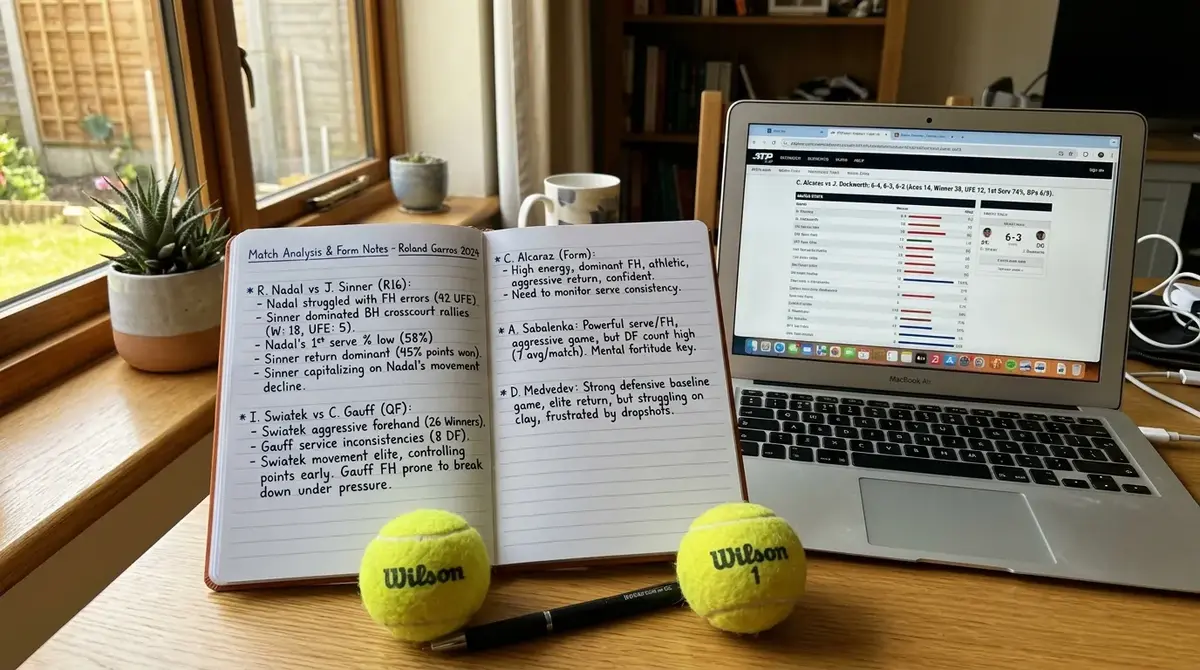
The worst tennis betting advice I ever received came from a man who swore he had a system. It turned out his system was “back the player who looked angrier in the warm-up”. He was, for the record, not a rich man. I tell that story because the word strategy gets thrown around in betting as though it means a secret formula, when what it actually means is the opposite of a secret: a boring, repeatable process you can run on every match without relying on a hunch or a hot tip.
This piece is about building that process. Not picks for this weekend, not a magic angle that beats the bookies, but a framework for reading matches, finding prices the market has got wrong, and staking in a way that keeps you in the game long enough for an edge to show. Tennis betting strategy is a system for making decisions, not a system for predicting winners, and the distinction is everything. Your edge comes from doing the unglamorous things consistently, not from being clever once.
Reading form without being fooled by it
A player won five matches in a row, so they are in great form and a safe bet. Right? Wrong often enough to bankrupt you. Recent results are the first thing every bettor looks at and the most misleading data point in tennis, because form is contextual in a way the win-loss column never shows. Five wins against journeymen on a favoured surface tells you almost nothing about a match against a top-ten opponent on a surface the player hates.
Reading form properly means asking what those results were actually worth. Who were the opponents and how were they ranked? On what surface, and is the upcoming match on the same one? Were the wins comfortable or did the player scrape through three-setters that flattered the scoreline? A run of tight victories can mean a player grinding out results despite not playing well, which is fragile, or it can mean a player who competes ferociously under pressure, which is durable. The scoreline does not tell you which. Watching, or at least reading detailed match reports, does.
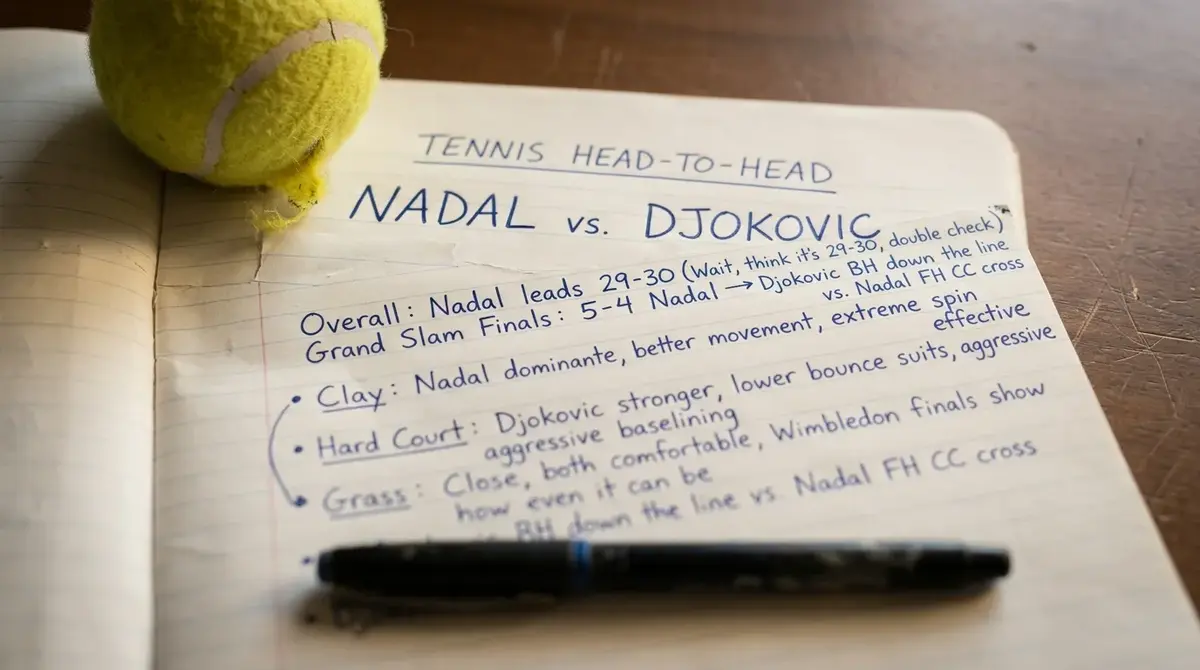
The matchup is where form earns its keep. Tennis is a head-to-head sport, and styles make matches in a way that raw rankings obscure. A heavy topspin baseliner can be a nightmare for a flat-hitting attacker regardless of who sits higher in the rankings. A big server who lives on free points can dominate a poor returner and struggle badly against a great one. The head-to-head record matters, but it matters as evidence of a stylistic clash, not as a superstition. Two players who have met five times with the same result usually have a genuine stylistic reason, and that reason often persists even as their rankings shift.
This is harder work than it sounds, and it has to be, because the competition is fierce. Europe accounts for over half of the global online sports betting market’s revenue, around 50.17%, which means the tours a British bettor cares about most are also the ones the sharpest money in the world studies hardest. You are not competing against the bookmaker’s opinion so much as against every serious bettor pushing the price towards the truth. Lazy form reading gets eaten alive in that environment. The edge sits with the bettor who looks past the win-loss column to the texture underneath it.
My own routine is to treat recent results as a prompt for questions rather than an answer. A five-match streak makes me ask why, not conclude anything. More often than not, the answer reframes the bet entirely, and occasionally it sends me the opposite way to the obvious read, which is exactly where the value tends to be.
One factor I weight heavily and most casual bettors ignore entirely is the schedule. Tennis is brutal on the body, and a player coming off a three-hour battle the day before, or buried deep in a week of back-to-back matches, is not the same player the form guide describes. Fatigue compounds across a tournament, it bites hardest in the best-of-five matches at the men’s Slams, and it shows up in a flagging third set long before it shows up in the rankings. Checking how much tennis each player has had in their legs, and how recently, has steered me away from backing tired favourites more times than I can count.
Surface and conditions, the variable everyone underweights
I have a friend who lost a small fortune backing a clay-court specialist throughout the grass season, on the grounds that the player was “clearly the better tennis player”. He was. He was also playing on a surface that neutralised everything he was good at. Surface is the single most underweighted variable in casual tennis betting, and it is the easiest place for a disciplined bettor to find an edge.
The three surfaces play fundamentally different sports. Clay is slow, the ball sits up, rallies are long and breaks of serve are frequent, which rewards stamina, movement and patience. Grass is fast and low, points are short, the serve dominates and a single break can decide a set, which rewards big serving and quick hands. Hard courts sit in between and act as the neutral baseline most form lines are measured against. A player’s results on one surface can be a poor guide to the next, and the transitions between surfaces are where the market is slowest to adjust.
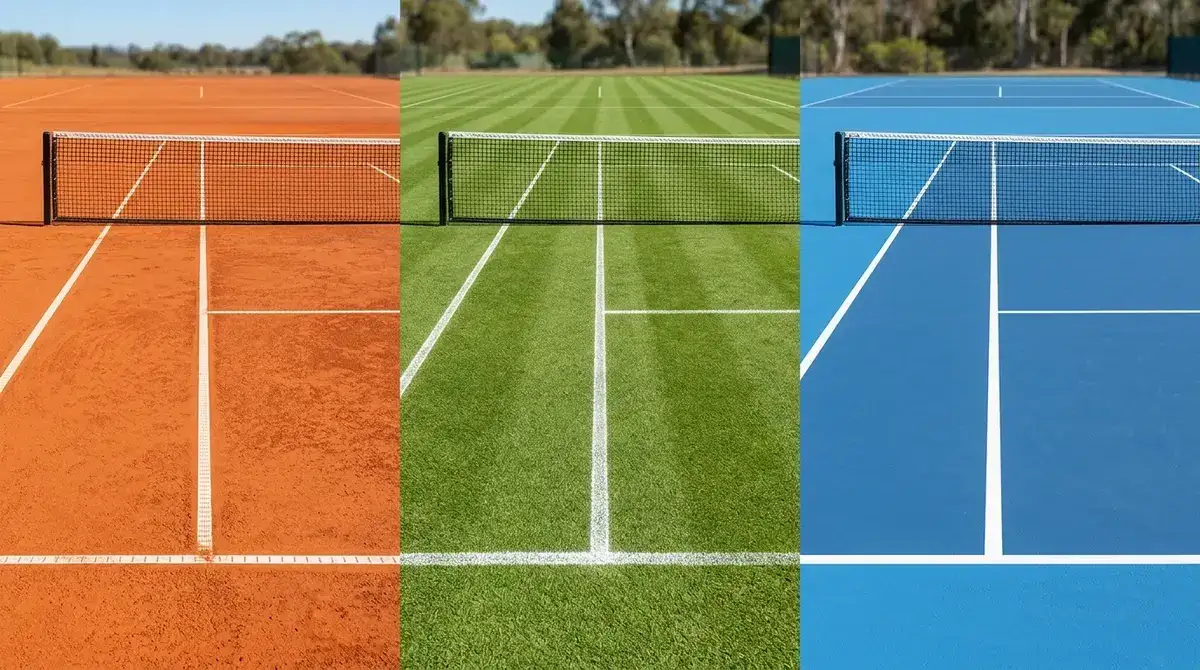
Conditions layer on top of surface. Indoor courts play faster and remove wind and sun as factors, favouring servers and aggressive players. Heat slows players down and rewards fitness, particularly in the best-of-five matches at the men’s Slams. Altitude makes the ball fly. Even the specific brand of ball used at an event changes how the court plays. None of this shows up in a ranking, and most of it shows up only faintly in recent form if those results came under different conditions.
The events that stress these variables most are the long ones. A Grand Slam delivers a continuous stream of in-play markets across fourteen straight days, and across that fortnight conditions shift constantly, from cool early-round evenings to baking afternoon sessions, from fresh courts to worn ones. A bettor who tracks how those conditions are favouring certain styles as the tournament wears on has a genuine, repeatable edge over one who treats every match in the draw as if it were played in a vacuum. Surface and conditions are not background detail. They are often the bet.
Finding an edge, which is just disagreeing with the price
Let me be blunt about what an edge actually is, because the word gets romanticised. An edge is not a system that picks winners. An edge is a disagreement between your assessment of a player’s chances and the probability implied by the odds, where you are right more often than the price says you should be. That is the entire game. Everything else is in service of finding and exploiting that disagreement.
The mechanism is simpler than people make it. Every price implies a probability. Odds of 2.00, or evens, imply a 50% chance. Odds of 1.50 imply roughly 67%. If you have done your form and matchup work and concluded that a player priced at evens actually wins this match 58% of the time, you have found value, because you are getting a 50% price on a 58% outcome. Over enough bets like that, you win, even though plenty of individual bets lose. The losing bets do not mean you were wrong; they mean variance is doing its job. Tennis is the fastest-growing slice of online betting, on track for nearly 14% compound annual growth out to 2031, which means more markets, more events and more chances to find these disagreements than ever before, but it also means more competition hunting the same ones.
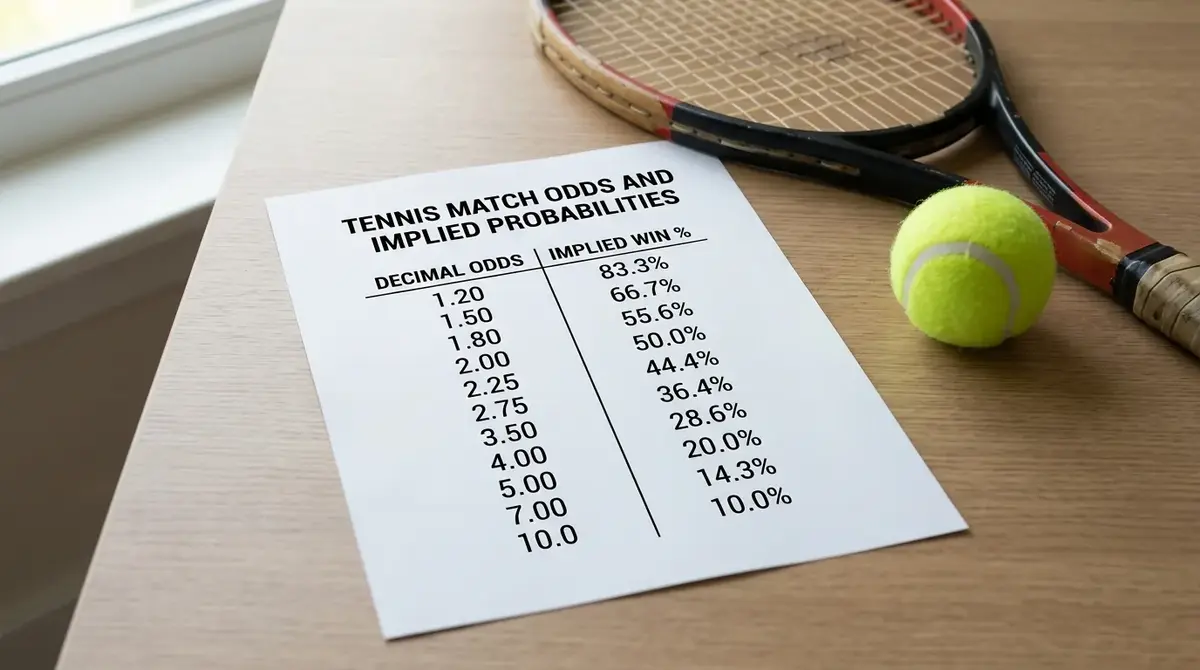
The hard part is estimating the true probability honestly. This is where most bettors fool themselves, because it is far easier to like a player than to coldly assess their win rate against a specific opponent under specific conditions. The discipline is to form your probability estimate before you look at the price wherever possible, so the odds cannot anchor your judgement, and then to bet only when your number and the market’s number disagree by enough to overcome the bookmaker’s margin. If your estimate and the price agree, there is no bet, however much you fancy the player. A correct opinion that the market already shares is worthless.
Because this is the engine room of any serious approach, I have written a dedicated, worked-through guide to value betting tennis that takes you through estimating fair odds and calculating expected value with real numbers. If you absorb one concept from this whole article, make it this one. You do not bet on who you think will win. You bet when the price is wrong. Those are completely different activities, and only the second one makes money over time.
Staking, the part that decides whether you survive
You can find genuine edges and still go broke. I have watched it happen, and I came uncomfortably close to it myself in my early years, because I treated staking as an afterthought. The truth I learned the hard way is that staking matters as much as selection, and arguably more, because the best edge in the world cannot help you if a bad run of variance wipes out your bankroll before the edge has time to pay.
The foundation is the unit. A unit is a fixed percentage of your total betting bankroll, usually somewhere between 1% and 3%, and it is the building block of every bet you place. If your bankroll is a thousand pounds and your unit is 2%, a one-unit bet is twenty pounds. By sizing bets as units rather than as whatever feels right in the moment, you keep your exposure proportional to your bank and you stop a single confident bet from doing real damage. The point of the unit is to make your staking boring and consistent, which is exactly what it should be.
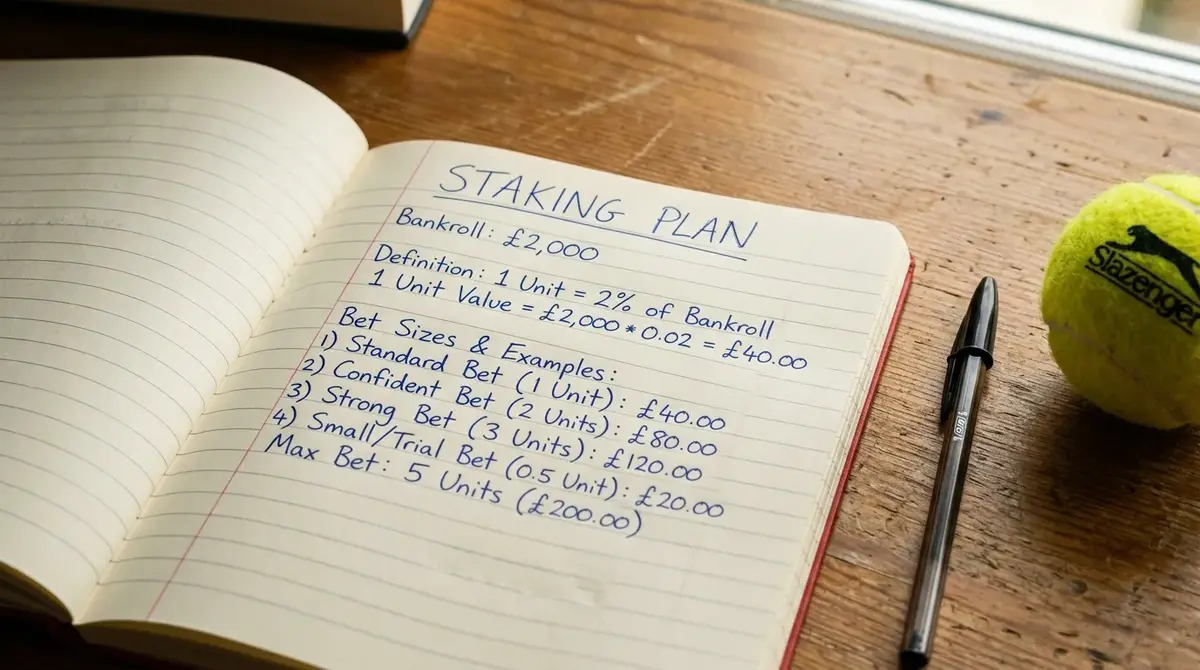
From there, the two main approaches are flat staking, where every bet is the same number of units regardless of how confident you feel, and percentage staking, where your unit recalculates as your bankroll grows or shrinks. Flat staking is the more robust choice for most bettors because it removes the temptation to pile on when you feel certain, and feeling certain is not the same as being right. The bets you are most confident about are not reliably your most profitable, so betting bigger on conviction tends to amplify your mistakes rather than your edges.
The discipline that ties it together is refusing to chase. A losing run is not a signal to bet bigger to win your money back; it is the normal weather of a sport with this much variance. The bettors who blow up almost never do so because their analysis was bad. They do so because they abandoned their staking plan after a few losses, doubled up to recover, and ran into a longer losing streak than their bankroll could survive. Protecting the bank is not the cautious part of strategy. It is the part that lets every other part work.

One more rule I treat as sacred: the betting bankroll is ring-fenced money I have decided in advance I can afford to lose, kept entirely separate from the money I live on. The moment betting funds and living funds blur together, every staking decision becomes loaded with pressure that has nothing to do with the bet in front of you, and pressure is where discipline goes to die. Decide what your bankroll is, never top it up from your wages in the heat of a losing run, and treat its size as the hard ceiling on your exposure. That single boundary does more to keep betting rational and sustainable than any other habit I know.
Building a routine you can actually repeat
The difference between a hobbyist and a serious bettor is not intelligence. It is routine. The hobbyist bets when a match catches their eye and a price looks tempting. The serious bettor runs the same process every time, which means their good decisions are repeatable and their mistakes are visible and fixable. A strategy you cannot repeat is not a strategy; it is a mood.
My routine has four fixed steps and I run them in the same order every time. I select the matches worth analysing, ignoring the rest of the card no matter how busy it is. I form a probability estimate from form, matchup, surface and conditions before checking the odds. I compare my estimate to the price and bet only where they disagree enough to clear the margin. And I record every bet, win or lose, with the reasoning behind it. That last step is the one almost everyone skips and the one that improves you fastest, because a record turns vague impressions into evidence about what is actually working.

Volume management is part of the routine too. There is always tennis on. With the tennis betting segment now worth around 16.53 billion dollars a year and matches running somewhere in the world almost every day, the temptation is to bet constantly, and constant betting is the enemy of a good strike rate. I would rather place five well-reasoned bets in a week than fifty reflexive ones, because each reflexive bet is a chance to make a sloppy decision and pay the bookmaker’s margin for the privilege. Fewer, better bets beat more, worse ones over any meaningful sample.
The routine also protects you from yourself on the bad days. When you are running cold, a fixed process gives you something to lean on that is not emotion. You keep selecting the same way, estimating the same way, staking the same way, and you trust that the edge reasserts itself over time. Without a routine, a bad run becomes a spiral of changing your approach in search of the thing that will turn it around. With one, a bad run is just a bad run that you ride out while doing the same sensible things you always do.
The mistakes that quietly drain a tennis betting account
If I could go back and hand my younger self a single page of advice, it would not be a list of winning angles. It would be a list of mistakes to stop making, because avoiding the obvious errors does more for your bottom line than any clever insight. The bettors who do well are rarely the most brilliant analysts. They are the ones who make fewest unforced errors, to borrow tennis’s own phrase.
The first and biggest is betting without value. Backing a player you are confident will win, at a price that already reflects that confidence, is not strategy, it is just paying the bookmaker to agree with you. A correct prediction at a poor price loses money over time. The second is overbetting, placing too many bets on too many matches because the action is available, which dilutes your good bets among a sea of mediocre ones. The third is ignoring the surface, backing players into conditions that neutralise their strengths because their general quality looks superior on paper.
Then there are the psychological errors, which are the most expensive of all. Chasing losses by betting bigger to recover. Falling in love with a player and backing them regardless of price or matchup. Letting a hot streak convince you that you have cracked it, then sizing up just in time for variance to remind you that you have not. These are not knowledge failures. They are discipline failures, and they undo more bettors than bad analysis ever does.
It is worth keeping the bigger picture in view too. The head of the Gambling Commission, Andrew Rhodes, has observed that the relative value of gambling has fallen in recent years, which is a polite, data-grounded way of saying the average punter gets a worse deal than they used to as margins and product design tilt further towards the operator. The bettor who survives that trend is the one who treats betting as a disciplined activity with a hard edge and clear limits, not a bit of fun that quietly bleeds the account. A repeatable, data-led approach is not just how you win. It is how you avoid being on the wrong side of that statistic.
Articles
Prepared by the bets-on-tennis.com editorial staff.
