


Let me answer the question in the headline before I do anything else, because you deserve a straight reply rather than a tease. Is tennis betting fixed? Organised match-fixing in tennis is real, it is documented, and it has put people in prison. But it is overwhelmingly concentrated in the lowest professional tiers, and the matches most British bettors actually bet on, the Slams and the main tours, are among the most heavily monitored sporting events on the planet. The honest answer is not yes or no. It is “in some corners of the sport, badly, and almost nowhere you are likely to be betting”.
That distinction between tennis as a sport and a specific match in front of you is the whole point of this article. A sport can have an integrity problem in its basement while the top floors are clean and watched around the clock. Treating “tennis is vulnerable to corruption” as “the match I want to bet on is probably rigged” is a category error, and it is one that costs nervous bettors a lot of fun and sharper ones a lot of edge.
So I want to give you the real picture, grounded in what the sport’s own integrity bodies actually report. How big the problem is and where it sits. Who is watching and how. Why tennis specifically is exposed in a way that, say, football is less so. And most usefully, how you as a bettor can stay well clear of the dodgy corners while enjoying the clean majority of the sport with confidence.
How big the problem actually is, in numbers
Vague fear is the enemy of good judgement, so let us replace it with figures. The bodies that monitor betting on tennis publish what they find, and the picture they paint is far more specific, and far less alarming for a mainstream bettor, than the “tennis is riddled with fixing” headlines suggest.
Across all sports, betting-integrity monitoring flagged 219 suspicious alerts in 2024, up 17% on the revised 187 from the year before. Tennis accounted for 58 of those alerts, sitting just behind football on 75, with the two sports together making up around 61% of all alerts raised. On the face of it, that puts tennis among the most-flagged sports, which sounds damning until you understand two things: what an alert actually is, and where in the sport those alerts cluster.
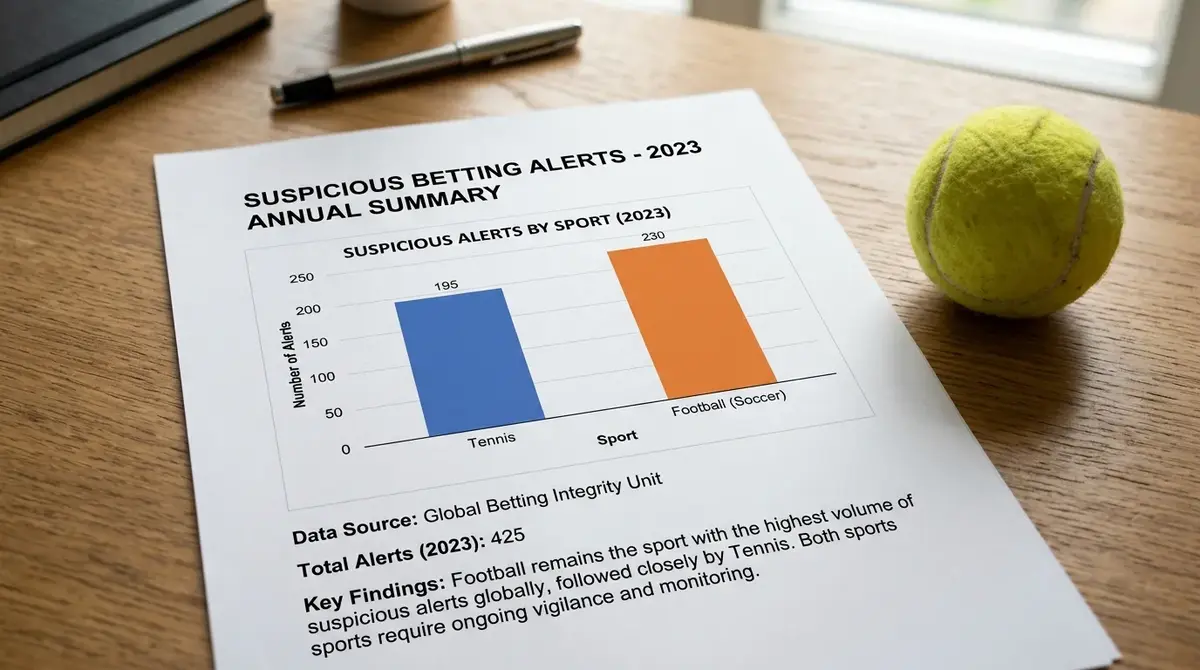
An alert is not proof of fixing. It is a flag that the betting patterns on a match looked unusual enough to warrant investigation, and unusual betting can have innocent explanations, from a key injury that the public did not know about to a simple surge of money on a popular player. Many alerts lead nowhere. They are the smoke that prompts a look for fire, not the fire itself. The fact that tennis generates a lot of alerts is partly a sign that tennis is watched closely and that its monitoring net is fine-meshed, not simply that it is more corrupt than other sports.
The longer trend matters too, because it cuts against the doom narrative. As recently as 2022 tennis recorded 106 alerts, and by 2023 that had fallen to 54, a drop of around 49% and the first year tennis sat below football rather than topping the table. That is a sport whose integrity systems were biting, not failing. The numbers move year to year, and 2024 saw a rise again, but the direction of travel over several years is of a sport that identified a serious problem and built genuine machinery to attack it. The volume of alerts tells you the watchdogs are awake, not that the house is on fire.
Who actually polices tennis, and how seriously
People imagine sports integrity as a lone official watching matches and frowning. The reality is a global surveillance operation running on data, and tennis sits at the centre of one of the most developed versions of it in any sport. Once you understand the scale of the monitoring, the question shifts from “is anyone watching?” to “how could a fix on a major match possibly stay hidden?”.
Two organisations matter most. The International Tennis Integrity Agency, the ITIA, is the sport’s dedicated integrity body, responsible for investigating and prosecuting corruption across professional tennis, from education programmes for juniors to bans and prosecutions for offenders. Alongside it sits the betting industry’s own monitoring network, the IBIA, which watches the money. Its reach is genuinely vast: the IBIA’s monitoring network covers more than 300 billion dollars of betting turnover a year, around half the entire global regulated online betting market, pulling data from 90-plus companies operating some 200 brands. When money moves suspiciously on a tennis match anywhere in that network, the pattern surfaces.

That combination of a dedicated tennis investigator and an industry-wide financial watchdog is why fixing a high-profile match is so difficult. The betting footprint of a fix is exactly what the IBIA network is built to detect, and the ITIA has the remit to act on what gets flagged. The sport has also been notably willing to confront its own weakness rather than deny it. The ITIA’s chief executive Karen Moorhouse has said that tennis is good at recognising that it has a vulnerability to corruption, which is a striking thing for the head of a sport’s integrity body to admit publicly, and exactly the kind of candour that tends to accompany a real effort rather than a cover-up.
None of this means the system is perfect or that no fix ever slips through. It means the sport is not pretending the problem away, and the surveillance covering the matches you are likely to bet is serious, well-funded and data-driven. The watchdogs are not a fig leaf. They are a working machine, and the money flowing through your bet on a Slam quarter-final is being watched by it.
The other half of the integrity effort gets far less attention than the investigations but probably prevents more harm: education. The ITIA runs extensive programmes teaching players, from seasoned professionals down to juniors, how corrupt approaches happen, why they are tempting and what the consequences are, on the logic that a player who understands the trap is far less likely to walk into it. Thousands of players pass through this training every year, alongside an online integrity course taken by tens of thousands more. It is unglamorous work that never makes a headline, but a sport investing in stopping corruption before it starts, rather than only punishing it afterwards, is a sport treating the problem seriously rather than managing its public image.
Why tennis is exposed in ways other sports are not
If the monitoring is this good, why does tennis keep showing up near the top of the alert tables? The answer is structural, and it is worth understanding, because it explains exactly where the risk lives and therefore how to avoid it. Tennis has a set of features that make its lower reaches uniquely tempting to fixers, and almost none of those features apply at the top of the sport.
Start with the economics. Tennis is an individual sport with no salary and no team to fall back on. A player ranked outside the top few hundred often loses money to compete, paying for travel, coaching and accommodation out of meagre prize money, while a single corrupt approach can offer more than they would earn in months of honest competition. That financial desperation at the bottom of the rankings is the root of the problem. The temptation is real precisely where the rewards of clean play are thinnest.
Then there is the structure of the sport itself. As the ITIA’s intelligence director Nick Iliffe has put it, tennis is a global sport with no real off-season, which means an enormous volume of matches takes place year-round, all over the world, many of them at obscure events with tiny crowds, minimal scrutiny and full betting markets attached. The sheer number of low-level matches available to bet on creates a vast surface area for fixing that simply does not exist in a sport with fewer fixtures and bigger spotlights. A single player can also control the outcome of a match, or even just a single game or set within it, far more directly than any individual can in a team sport, which makes a targeted fix mechanically simpler to execute.

Put the desperate economics together with the year-round flood of barely-watched matches and the individual nature of the sport, and you have a precise diagnosis. The vulnerability is real, but it is overwhelmingly a property of the lower tiers, the ITF and Challenger events where prize money is thin and visibility is low. The top of the sport, where the money is good, the scrutiny is intense and the players have everything to lose, is a fundamentally different environment. The risk is not spread evenly across tennis. It is concentrated, and knowing where it concentrates is most of the battle.
It is also worth separating two things that often get lumped together under the same scary word. Fixing an entire match, where a player agrees to lose outright, is the dramatic version, but it is not the most common one. Far more frequent, and far harder to spot, is spot-fixing, where a player agrees to lose a specific game, a particular set, or even to double-fault at an arranged moment, while still going on to win the match. This appeals to fixers precisely because it is subtle and the headline result looks entirely normal, and it is one reason the betting markets on individual games and sets at obscure events deserve extra caution. The final scoreline can be perfectly clean while a single point buried inside it was bought and sold.
What happens when a match gets flagged
So a match throws up suspicious betting patterns and an alert is raised. What then? A lot of bettors imagine the answer is nothing, that alerts vanish into a drawer. The reality is a structured process that turns flags into investigations and, where the evidence supports it, into sanctions, and understanding that process is the best antidote to the fear that the whole thing is a sham.
An alert triggers a review rather than a verdict. The monitoring data showing unusual money is shared with the integrity body, which assesses whether the pattern has an innocent explanation or warrants deeper investigation. Where it does, investigators gather evidence, which can include betting account data, communications and player cooperation, and that process takes time precisely because the standard for sanctioning someone is high. The data genuinely drives outcomes: in 2024 the IBIA’s information contributed to 33 matches being established as corrupt and to 17 sanctions being handed down. Those are not theoretical numbers; they are real matches identified and real consequences imposed off the back of the monitoring.

The consequences can be severe. Across professional tennis in 2024, 34 individuals were sanctioned for offences relating to match-fixing and illegal betting, with penalties ranging from fines to lengthy or lifetime bans from the sport. The system catches people and punishes them, which is both reassuring and a useful reminder that fixing is a high-risk crime for the player, not a casual side hustle. The deterrent is real because the enforcement is real.
The single most important thing for you to internalise is that an alert is not a verdict. A flagged match is a match that looked odd and earned a closer look, not a match proven to be bent, and most flags do not end in a sanction. Conflating the two is how rumours and panic spread. I have written a dedicated explainer on exactly what an ITIA alert means, how it differs from a finding of guilt, and what you should and should not read into one, in the guide to tennis match alerts. If you take the integrity of the sport seriously, that distinction between suspicion and proof is the one to get right.
Regulated and unregulated betting are not the same risk
Here is a part of the picture that almost never gets discussed, and it changes how you should think about your own safety as a bettor. The fixing problem in tennis is bound up with where the betting happens, and the choice between a regulated and an unregulated betting environment is not just about whether you get paid. It is about whether your money is helping fund the very problem you are worried about.
Regulated operators, the licensed sportsbooks and exchanges you would use as a UK bettor, are part of the monitoring solution. They share data with the integrity network, they are bound by rules, and the suspicious money they spot is precisely what feeds the alert system. The vast unregulated and black-market betting ecosystem, much of it offshore and beyond the reach of any regulator, is a different animal entirely. It is where a great deal of the fixing money actually flows, because it offers high limits, anonymity and no obligation to report anything to anyone. Fixers do not place their corrupt bets through transparent, monitored channels if they can avoid it.

The practical consequence for you is clean and simple. Betting through a UK-regulated operator does not just protect your own money and give you recourse in a dispute. It also means you are betting inside the monitored, transparent part of the ecosystem, the part that is actively working against fixing rather than enabling it. The integrity network’s reach across regulated operators is exactly why suspicious activity on major markets gets caught, and your bet through a licensed operator is a bet inside that protective net.
Step outside it, onto an unlicensed or black-market site chasing better limits or anonymity, and you lose all of that at once. No protection if they refuse to pay, no recourse, and you are now transacting in the same shadowy space the fixers prefer. The regulated-versus-unregulated choice is often framed purely as a safety-of-funds question, but for tennis specifically it is also an integrity question. Staying inside the regulated market is one of the most effective things you can do to keep your betting clean.
How to keep your tennis betting on the safe side of the sport
After all the data and structure, the genuinely useful question is what you should actually do with this knowledge. The good news is that protecting yourself from the corrupt corners of tennis is almost entirely within your control, and it comes down to a few deliberate habits rather than any special expertise. You do not need to become an integrity analyst. You need to bet where the problem is not.
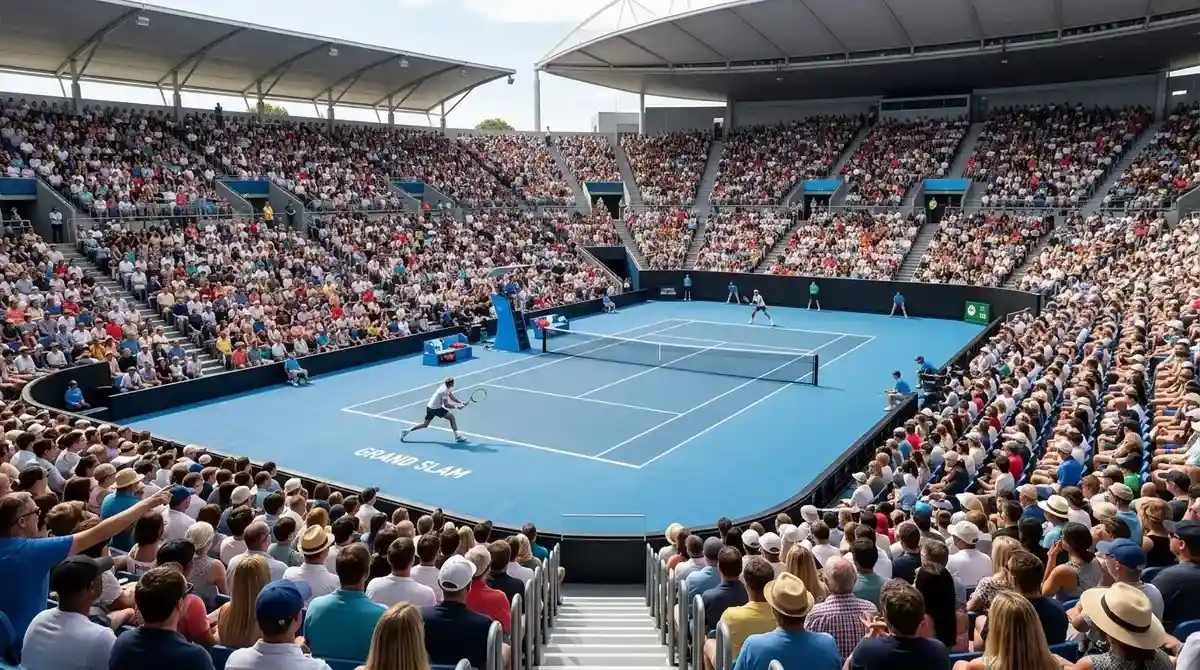
The first and most powerful habit is to favour the higher tiers. The vulnerability concentrates in the lowest professional levels, the ITF and Challenger events with thin prize money and minimal scrutiny, so the simplest protection is to weight your betting towards the main ATP and WTA tours and the Grand Slams, where the economics, the visibility and the monitoring all work against fixing. You sacrifice almost nothing by doing this; there is more than enough betting on the major events to keep anyone occupied, and the markets are deeper and the prices sharper there anyway.
The second habit is to stay inside the regulated market, for all the reasons above. Bet through UK-licensed operators, verify the licence, and never be tempted onto a grey-market site by better limits or looser terms. The third is to treat unusual prices with curiosity rather than greed. If a market on an obscure lower-tier match looks too good, or moves in a way that makes no sense given the players involved, the value you think you have spotted may be the footprint of something you want no part of. A suspiciously generous price on a match nobody is watching is a warning, not an opportunity.
Beyond that, keep a sense of proportion. The fear that tennis is fundamentally rigged is, for a mainstream bettor, wildly overblown. The sport has a real but localised problem, a serious and well-funded apparatus working against it, and a clear pattern to where the risk sits. Bet the major tours through licensed operators with your eyes open, and you are betting on one of the most closely watched, transparent corners of professional sport anywhere. The dodgy matches exist, but they are not the matches in front of you, and a little knowledge about where the line sits is all it takes to stay firmly on the right side of it.
Articles
Prepared by the bets-on-tennis.com editorial staff.
