


The cash out button is the most seductive feature in modern betting, and for most people most of the time, pressing it is a mistake. I have watched bettors with a winning position panic and cash out for a fraction of what patience would have paid, and I have done it myself enough times to know the pull is real. Understanding what cash out actually is, and what it costs you, turns it from a comfort blanket into an occasionally useful tool.
Cash out lets you settle a bet before the event finishes, taking a price offered by the bookmaker that reflects the current state of play rather than waiting for the final result. On a tennis bet that is winning, cash out offers you a guaranteed profit smaller than your potential full return. On one that is losing, it offers to return a portion of your stake. It feels like control, and that feeling is exactly what the bookmakers are counting on.
What You Are Really Paying For
Every cash out figure has the bookmaker’s margin built into it, and that is the part the comfortable feeling hides. The price you are offered to settle early is never the true mathematical value of your position. It is shaded in the bookmaker’s favour, just like the original odds, which means cashing out repeatedly bleeds value out of your betting in the same quiet way that taking shaded prices does.

Here is the mechanism. When your bet is winning, the cash out offer is lower than the genuine probability-adjusted value of holding on, so you are accepting a worse-than-fair price for the security of locking in a profit. When your bet is losing, the offer to hand back part of your stake is similarly shaded, so you recover less than the position is really worth. Either way, the convenience comes at a cost, and that cost recurs every single time you press the button. Andrew Rhodes, the chief executive of the Gambling Commission, has noted that “the relative value of gambling has fallen in recent years,” and habitual cashing out is a perfect example of how a bettor quietly accepts worse value than they need to, one comfortable decision at a time.
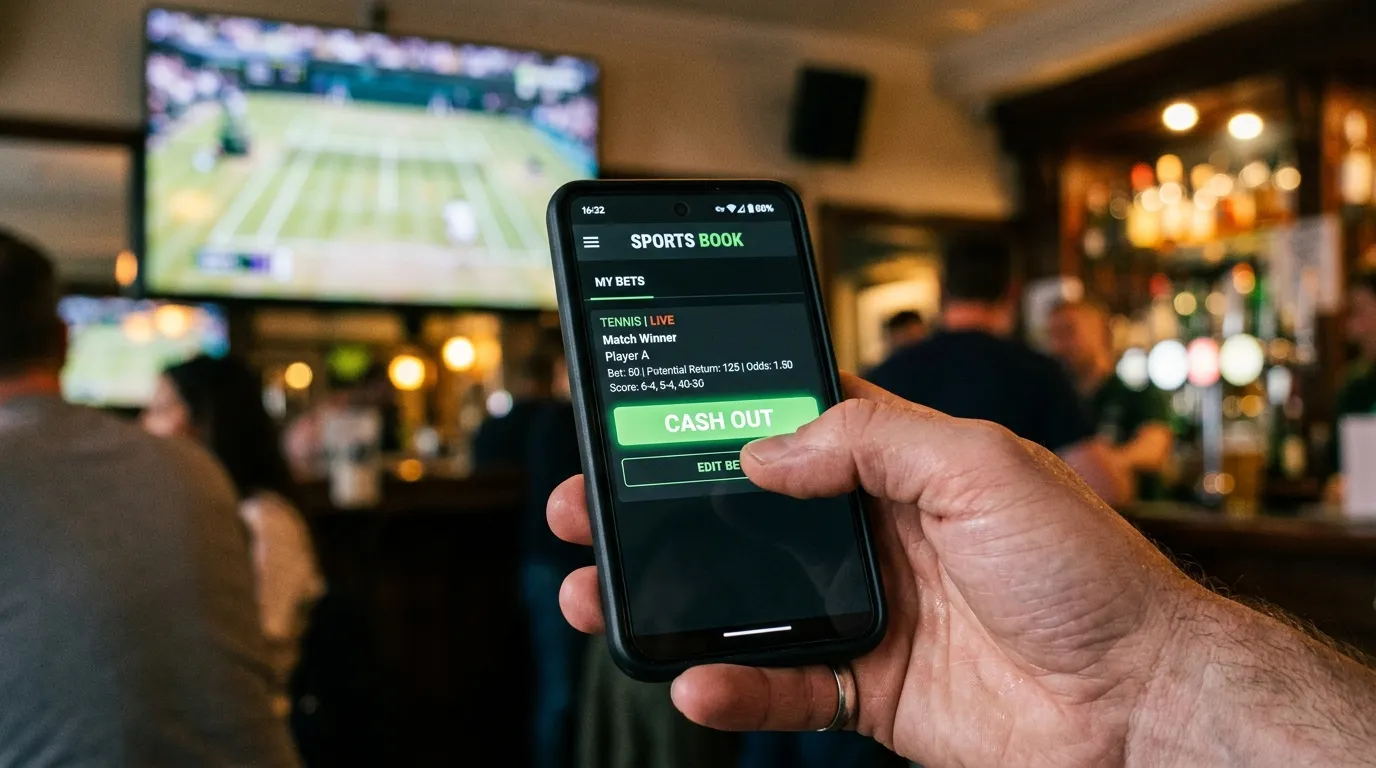
This does not make cash out useless, but it does mean it should never be a reflex. Every time you cash out a winning bet out of nerves, you are paying the bookmaker a fee for the privilege of not waiting, and over a season those fees add up to real money surrendered for no good reason beyond anxiety.
Why Tennis Makes the Button So Tempting
Tennis is almost custom-built to trigger the cash out impulse, because its scoring swings so violently. A player two points from victory can lose three games in a blink, and watching a winning bet teeter on those swings is agonising. The sport’s stop-start rhythm, with its breaks between points and games, gives you constant moments to second-guess a position, and the button is always right there.

The live betting ecosystem amplifies this enormously. In-play wagering now makes up 62.35 percent of the online sports betting market and is growing fast, and in mature European markets the in-play turnover on major tennis and football matches already exceeds the pre-match volume. That means most tennis betting now happens while the match is unfolding, with the score swinging and the cash out figure flickering up and down in real time. The more you bet live, the more often you face the temptation, and the more disciplined you have to be about resisting it. A volatile match can show you a tempting cash out figure one moment and snatch it away the next, which is precisely the environment in which panicked decisions flourish.
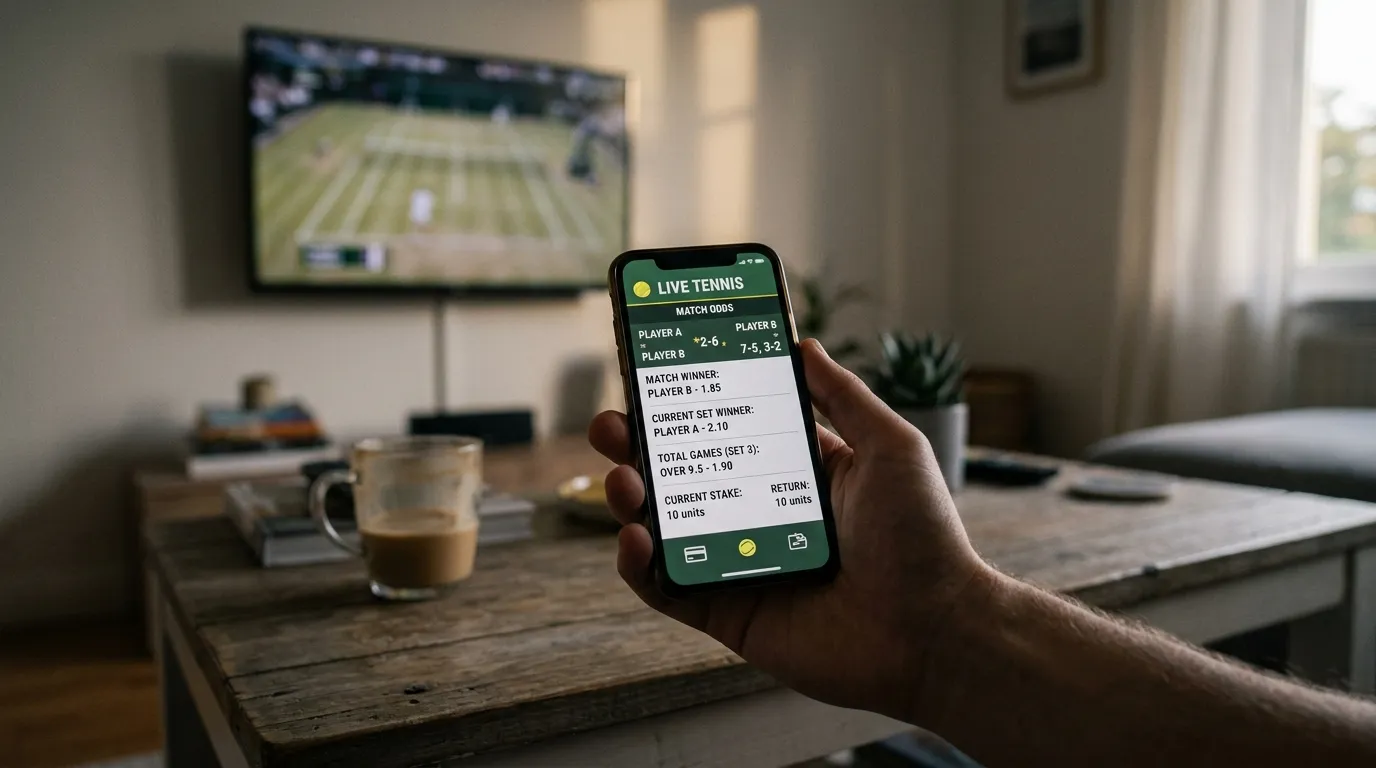
I treat the swinging cash out number as noise to be ignored most of the time rather than a signal to act on. The fact that my winning position briefly wobbled does not change the reason I made the bet or the value I judged it to hold. Reacting to every momentum shift is how you turn a good bet into a mediocre one, paying the bookmaker’s margin for the privilege of your own nervousness.
When Cashing Out Actually Makes Sense
For all my scepticism, there are genuine situations where cash out is the right call, and they share a common thread: new information, not new emotion. If something has changed during the match that genuinely alters your view of the likely outcome, an apparent injury, a visible drop in a player’s level, conditions shifting, then settling early on a position you no longer believe in is sound. You are acting on a revised judgement, not on fear.

Cash out can also serve a legitimate role in managing a larger betting position or locking in a result that meaningfully protects your bankroll at a key moment. Used deliberately, as a considered decision rather than a panic response, it is a tool like any other. The test I apply is simple: am I cashing out because my assessment of the bet has genuinely changed, or because I cannot stand the discomfort of watching it ride? If it is the second, I leave the button alone.
Cash out only exists because of the live betting revolution, and you cannot use it well without understanding the in-play environment it lives in. The same skills that make someone good at live betting, reading momentum, judging when the score reflects the true state of the match and when it lies, knowing when information is real and when it is noise, are exactly the skills that tell you when cash out is value and when it is a trap. I dig into that whole environment in my guide to live tennis betting. Treat the button as an occasional tool for acting on new information, never as a cure for nerves, and it stops costing you money you should be keeping.
Articles
Created by the "bets-on-tennis.com" editorial team.
